- Colonial Period
- About the Era
- Explore the Scrapbook
- Slideshow
-
- Recipes
- Arts & Crafts
-

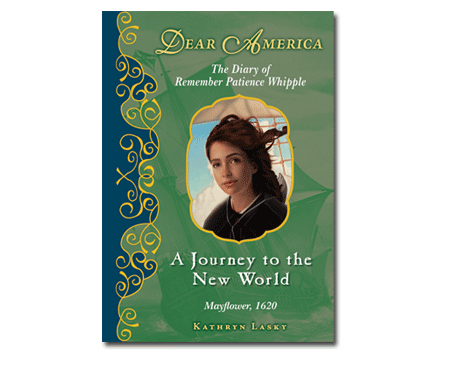
A Journey to the New World: The Diary of Remember Patience Whipple, Mayflower, 1620
On Wednesday, September 6, 1620, 102 brave people — including 34 children — crowded onto the Mayflower to build a colony in a new land. The journey was long and difficult. There was little to eat except for salted beef and pork, dry biscuits, and also some cheese, peas, and beans from Holland. Even this little amount of food spoiled quickly, and the barreled water was not safe to drink. Many of the passengers were terribly seasick. After more than two months the Pilgrims arrived at what is now Cape Cod, Massachusetts, but the land looked rocky and ominous. They decided to explore further and arrived at the more welcoming shores of Plymouth.
The first few months in Plymouth were cold and harsh for the new immigrants. Coming to this foreign land in the dead of winter turned out not to be the best plan. The Pilgrims arrived with no shelter, no medical care, and very few provisions. Illness swept through the tiny community, and more than half the Pilgrims died during that first winter.
The colonists came into contact with Native Americans soon after their arrival. When spring finally came the Native Americans introduced the Pilgrims to maize, or Indian corn. They also taught the Pilgrims where to hunt for deer and turkey and how to fish. While some of the English crops like beans and wheat did not grow very well in the rocky soil, maize thrived. That October, the surviving Pilgrims celebrated the first Thanksgiving with their Native American friends who had helped them survive.
Meet Mem
Mem journeyed to the New World with her Puritan family on the Mayflower. She watched as so many of the settlers died around her and recorded in her journal the adjustments that all of the Pilgrims needed to make to their new land.
I raced to the door, and there walking straight up our narrow street between the two rows of our houses was a feathered man bold as anything. He be tall and straight. This feathered man opens his mouth and what comes out, but English. And here is what he said exactly: "Welcome, my name is Samoset. I come not from here, but from Mohegan to the north, by sail with a strong wind a day, by land five."
I do not think that the upgrowns were on purpose unfriendly, but they did appear fearful whereas we children were more fascinated than fearful and wanted to do anything to make Samoset stay and like us.